.png)
.png)

Why inventory management is the bottleneck according to Plantform
Summarized:
- Inventory isn’t the issue. Unreliable information is. Companies have stock, but without reliable, shared data they cannot manage or make decisions effectively.
- Fragmentation kills control. Different definitions, processes, and systems lead to inconsistent data, multiple “truths,” and decisions based on assumptions.
- Market pressure requires real-time reliability. With “buy = have,” availability must be accurate, but many companies still rely on outdated snapshots and manual workarounds.
- The solution is alignment, not just technology. Standard definitions, one source of truth, and connected processes enable real-time insight, predictable operations, and true business steering.
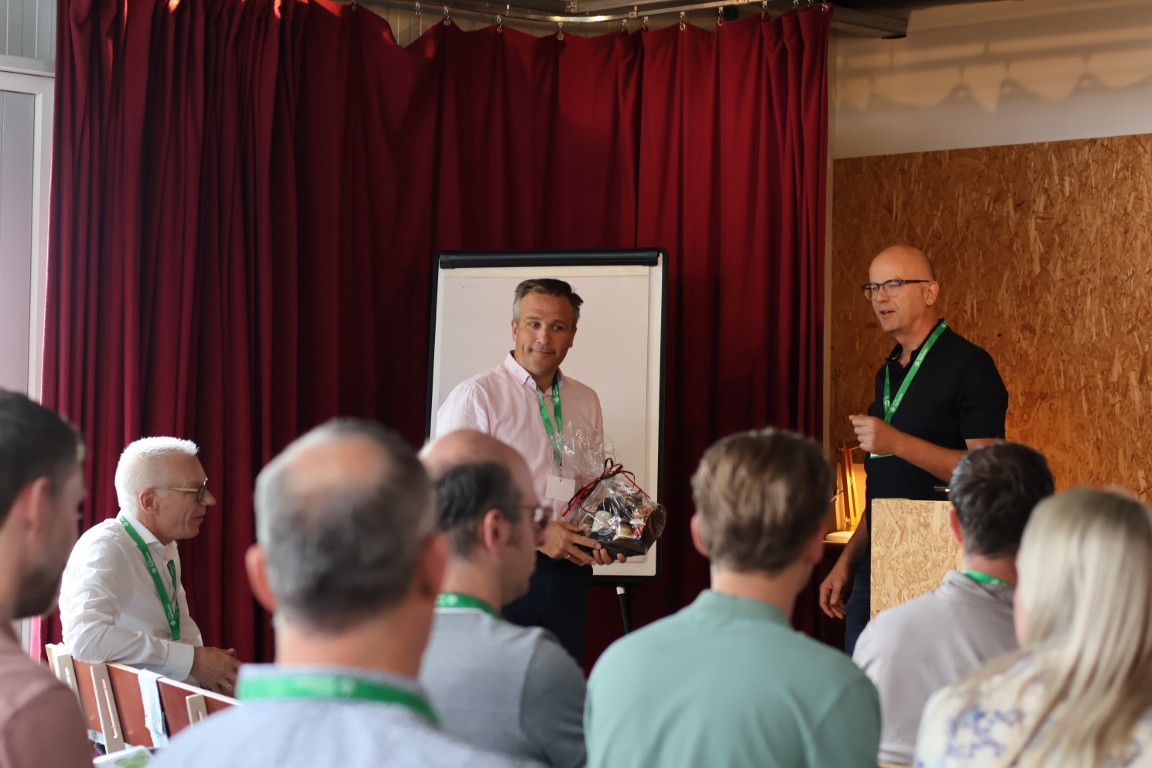
During the Agriware customer day, Leo de Vries (Chair of Plantform and Managing Director at KP Holland Plants) brought the issue back to its essence. Not a complex story about systems or technology, but a clear and recognizable reality from day-to-day practice.
He started with a seemingly simple statement:
“The best advice is inventory…”
…immediately followed by the core of the problem:
“…that is known.”
That’s exactly the challenge many companies face today. The inventory exists, but insight does not. And without insight, you simply can’t manage effectively.
Inventory is not the problem. Unreliable information is.”
Working together towards one way of working
Plantform believes this is not an individual problem, but a sector-wide challenge. As long as companies continue to work with their own definitions, processes, and systems, data remains fragmented and therefore unreliable.
That’s why growers collaborate within Plantform. Not only to share knowledge, but to jointly define how the sector approaches digitalization, data, and inventory management. The goal is to move from fragmented ways of working to one consistent approach.
Once everyone speaks the same language, a foundation for control emerges.
The chain is changing faster than organizations
The environment growers operate in has changed significantly in recent years. Inventory is moving closer to the source, products are increasingly delivered retail-ready, and the number of variants continues to grow.
At the same time, internal complexity is increasing. Companies operate across multiple locations, order types, and departmental workflows. As a result, information becomes fragmented and disconnected from reality.
In practice, this leads to unsynchronized data, multiple versions of the truth, and decisions based on assumptions.
Increasing pressure: “buy = have”
With digitalized trade, market expectations are changing:
“The transition to the platform Floriday, with its ‘buy = have’ principle, requires better data-driven planning and inventory management…”
Where uncertainty was once accepted, immediate availability is now expected. What is sold must actually be there.
But reality shows otherwise:
“…many companies still rely on manual counts and Excel; system integration is lacking.”
As a result, companies manage based on snapshots rather than real-time data and those snapshots are almost always outdated.
Start with understanding what you mean
Instead of jumping straight to technology, Plantform starts at the foundation. One key insight stands out:
“Definitions, definitions, and more definitions… what do we actually mean?”
What is availability? When is a product sellable? What counts as inventory? Without clear agreements, consistent data is impossible.
If everyone means something different, control becomes impossible.
The first step is not systems, but structure and definitions.
The first step is not systems, but structure and definitions.
Availability is not a given
On paper, inventory management seems simple: what you have minus what you sell equals availability. In practice, it’s far more dynamic.
On the supply side, changes occur due to losses, quality, and growing cycles. On the demand side, orders, reservations, and customer needs are constantly shifting.
Availability is therefore not a fixed number, but a continuously changing outcome.
You can only rely on that outcome when all underlying data is correct.
Data determines what you see, and what you decide
This brings data quality to the center. Leo puts it clearly:
“Garbage in = garbage out.”
If the input is wrong, the output is wrong. This directly impacts operations, planning, and decision-making.
If the input is wrong, the output is wrong. This directly impacts operations, planning, and decision-making.
Poor data also has a second effect: people lose trust in systems. That’s when Excel sheets and personal workarounds return—making the problem worse.
This is not an IT project
This challenge cannot be solved with technology alone. It requires alignment across organization, data, people, and systems.
“Reliable data is critical.”
But that only happens when processes are clear and people work consistently in the same way.
It requires a different way of working—more disciplined and collaborative.
One source of truth as the goal
Plantform’s direction is clear: companies must move towards one reliable source of truth.
That means real-time insight, unified definitions, and connected systems. Only then can data truly be used to steer the business, not as a theoretical ambition, but as a market necessity.
You don’t do this alone
Supply and demand affect the entire organization. Sales, production, logistics, and planning are all part of the same challenge.
Leo concludes simply:
“Because ABCs, you do them together.”
Leo adds: “Our collaboration with Agriware has been very valuable and positive.”
Without collaboration across and between departments, the problem remains.
Inventory is not the problem.
Unreliable information is.
As long as companies don’t know exactly what they have, managing availability remains a gamble.
How Agriware supports this
After Leo’s story, William van Loenen (CPO at Mprise Agriware) translated it into practice. He showed how companies can address this challenge, based on the same logic: supply (A), demand (B), and available (C).
In reality, this seemingly simple calculation is complex. Availability is not a field in your system, it is the result of everything happening in operations. Missing inputs, substitutions, unexpected losses, or changes in growing time all directly affect availability and must be captured as part of the process.
The challenge is not to register data occasionally, but to continuously combine it into one reliable outcome.
From registration to steering
Agriware supports this by not just capturing data, but actively using it in operations. The system provides insight into availability, validates orders against stock, and supports reservation and allocation.
It also helps identify shortages and enables immediate adjustments via production or purchasing. This shifts the system’s role from registration to steering.
Steering on results: delivery reliability
William made this tangible with a clear objective: improving delivery reliability.
This is only possible when you know exactly:
- what is available
- what is being produced
- what has already been sold
Behind this are multiple roles, from production and purchasing to sales and planning. When everyone works with the same data and insights, predictability emerges.
The process becomes cyclical: measure, compare, adjust — continuously.
.png)
Supporting daily operations
A key part of the solution is bringing data closer to daily operations. Not analyzing afterward, but creating insight during the process.
That means data is available where work happens: in the greenhouse, the warehouse, planning, and sales. This makes it easier to capture data at the right moment and detect deviations immediately.
Technology also reduces repetitive manual tasks. By automating processes and supporting controls, it saves time and reduces errors.
Technology as an enabler
Technology does not solve the problem on its own, it enables better collaboration.
By centralizing data and connecting processes, a shared view of reality emerges. Departments can align better, and dependencies become visible.
The system acts as a connecting layer between processes and roles.
From insight to predictability
When the basics are right, data, structure, processes, something new becomes possible: predictability.
Companies can not only look back, but also look ahead based on reliable information. Deviations are detected earlier and corrected sooner.
That’s what it’s about: not working harder, but being better guided by information.
The combined perspective
What Leo and William together show is that the problem and solution align perfectly.
Leo explains why control is lacking:
fragmented data, unclear definitions, and lack of alignment.
William shows how to solve it:
by structurally connecting supply and demand, supporting processes with technology, and continuously steering on real-time data.
The solution is not in one element; but in the combination of data, processes, and systems.

Connect with us
& explore what's possible
120+
#1 Software
20+ Years

.jpg)